Gustavian Style: A Coup d'État in Sweden
A King Comes Home from Paris

Gustavian style began with King Gustav III. He ruled Sweden for only about twenty years, from 1772 until 1792, yet his patronage of the arts launched one of the most enduring design styles in Europe.
Gustav was in Paris in 1771, enjoying the French court and the splendor of Versailles, when word arrived that his father had died. He returned home as king. Within a year he staged a quick, bloodless coup d'état that took power back from the squabbling factions of the parliament and put it firmly in the hands of the crown.
With that power came a vision. Gustav wanted Sweden to be as cultured and elegant as the France he had fallen in love with. He brought home French ideas, French books and French taste, and he set Swedish architects, painters and cabinetmakers to work. What they created was heavily influenced by France, but it was never a copy.
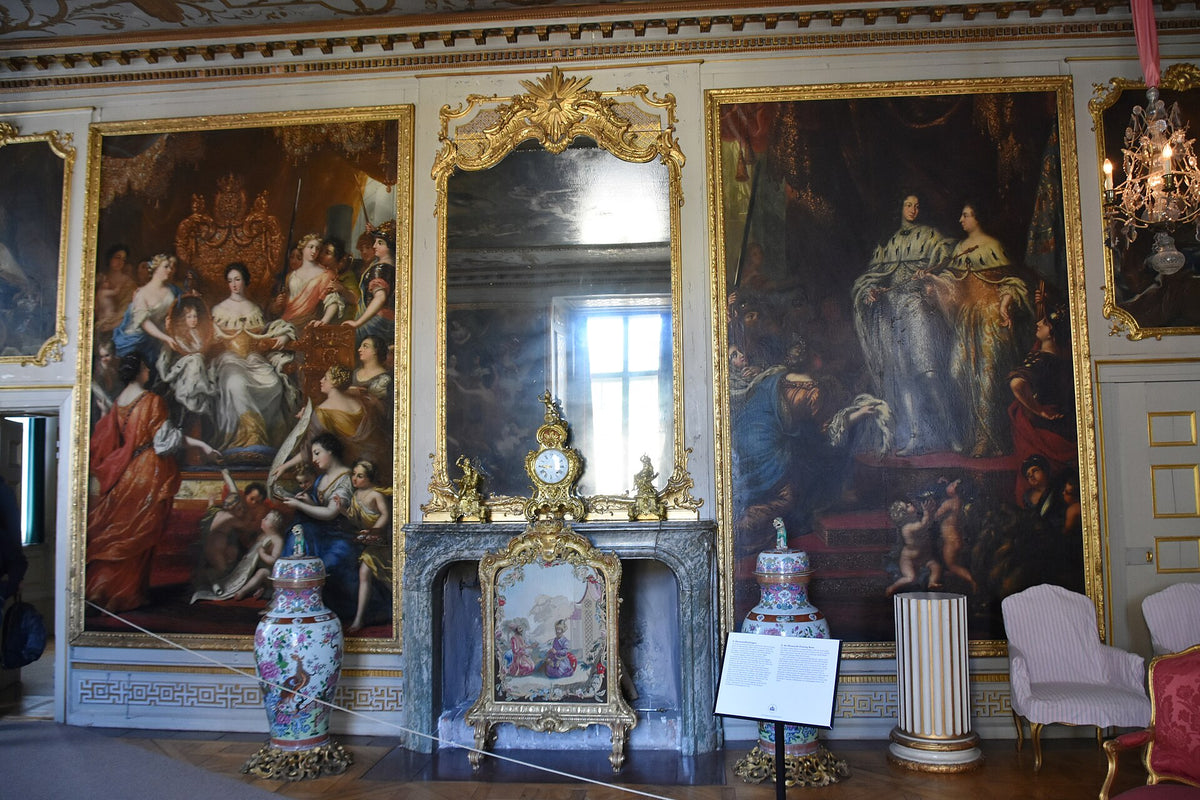
Instead of embracing the swirls and frothy curves of Rococo, Sweden developed a style built on symmetry, straight lines, columns and Greco-Roman motifs. That restraint is what sets Gustavian apart from its French cousin, and it is the reason the style still feels so fresh today.
Early and Late Gustavian
Gustavian design falls into two phases, and once you know what to look for you can spot the difference.
Early Gustavian (roughly 1770s) is a restrained Swedish interpretation of the French Louis XV and Louis XVI styles. You still see a few gentle curves: a softly rounded chair back, a cabriole leg giving way to a straight one. Carving is delicate. Ribbons, bowknots, small rosettes and garlands of laurel appear, but always with a light hand.
Late Gustavian (1780s into the early 1800s) turns firmly toward the classical world. Engravings of the newly excavated ruins at Pompeii and Herculaneum were circulating across Europe, and they reached Sweden too. Designers took their cues from Italy and ancient Rome. Lines straightened completely. Legs became tapered and fluted like little columns. Chair backs became square, oval or shaped like a lyre. Decoration leaned on beading, fluting, urns, medallions and Greek key borders.
Gustav himself traveled to Italy in 1783 and 1784, and he came home with even more enthusiasm for the antique. That journey helped push Swedish taste toward the cooler, more architectural late style.
Inside the Palaces
The most ornate furnishings were reserved for the royal palaces and the upper class. Downstairs, the receiving rooms glowed with rosewood, fine veneers and gilding. Upstairs, things grew quieter. Even the king's bedroom was painted rather than gilded.
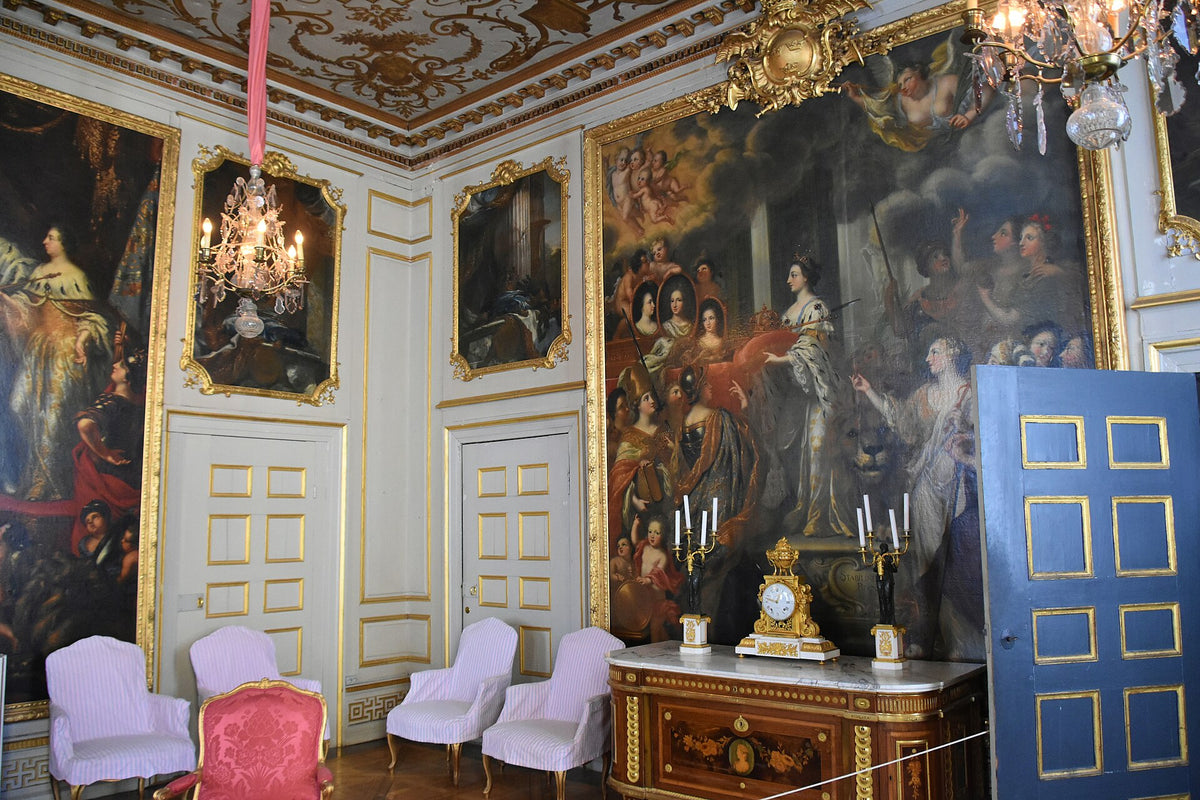
A small circle of talented people gave the style its shape. Jean Eric Rehn designed interiors and furniture for the court. Louis Masreliez, who had trained in France and Italy, painted the delicate Pompeian-inspired walls of Gustav III's Pavilion at Haga. Cabinetmaker Georg Haupt, who learned his craft in Paris and London, became the royal furniture maker and produced some of the finest pieces of the period.
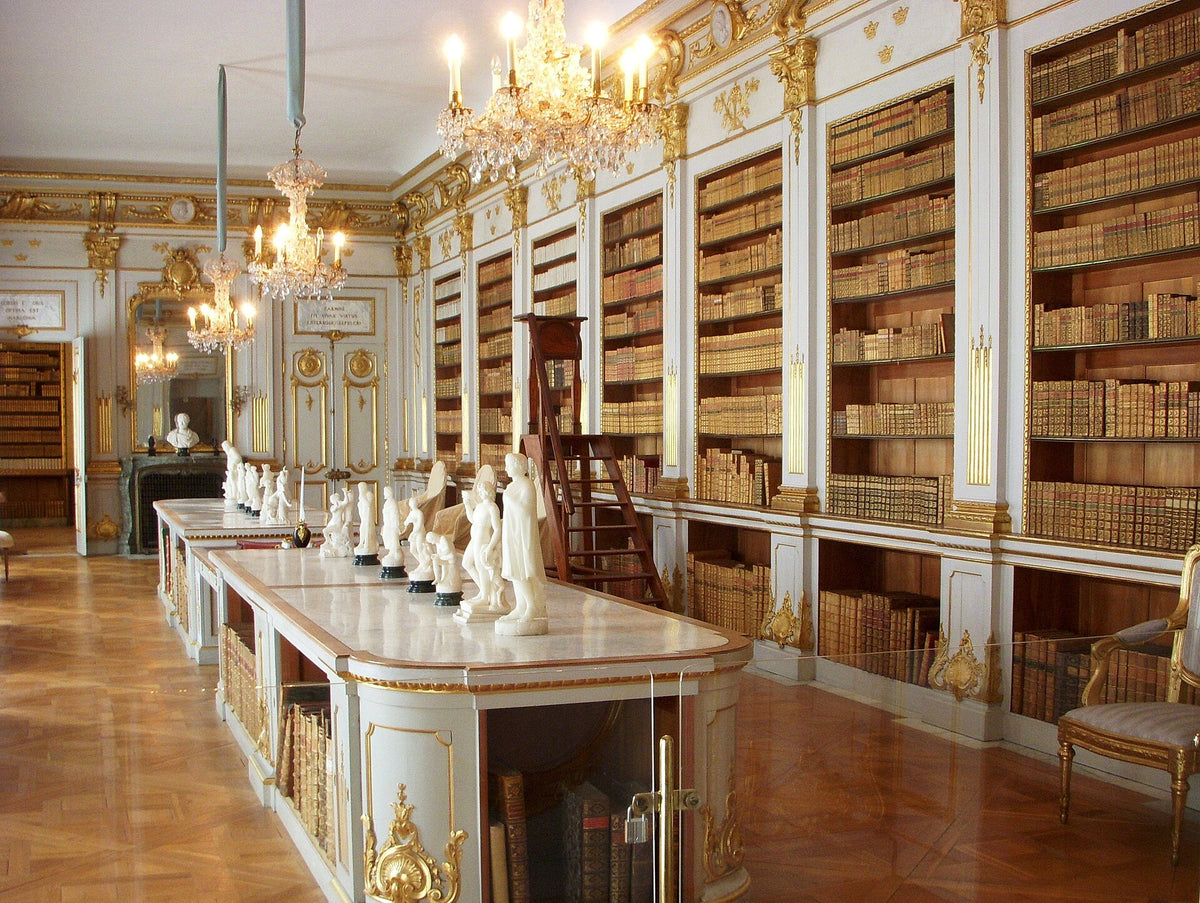
What ties their work together is the palette and the line. Gustavian rooms are known for clean, hand-carved lines and a cool color palette of soft blues, pearl grays, straw yellows and weathered whites. Walls were often painted in pale tones with simple panel moldings. Floors were scrubbed pine. Tall windows were left bare or dressed in light linen. The goal was a room full of light, balance and calm.
Gustavian for Everyone Else
The style quickly caught on with ordinary Swedes. The average manor house and farmhouse could not afford the gilded furniture found in the royal houses, so local craftsmen recreated the designs using the materials and methods they had at hand.
They were wonderfully resourceful:
-
Pine instead of mahogany. Solid Swedish pine, known as massiv furu, replaced costly imported hardwoods, then was painted to look refined.
-
Faux finishes. Painters marbled tabletops and imitated expensive wood grain so a humble piece could hold its own beside fine furniture.
-
Painted walls instead of wallpaper. Stenciled borders, painted panels and even full murals gave rooms the look of silk-hung palace walls.
-
Linen and cotton. Simple checked and striped fabrics, often blue and white or red and white, covered chair seats and slipcovered sofas.
Those light painted finishes did more than look pretty. During the long, dark Scandinavian winters, pale furniture and walls reflected every bit of candlelight and daylight around the room. Practical and beautiful at the same time, this "country Gustavian" look is the version most of us picture today.
How to Recognize a Gustavian Piece
Whether you are browsing an antique shop or planning your own makeover, these are the details that say "Gustavian":
-
Straight, tapered legs, often fluted, sometimes ending in a small turned foot.
-
Carved rosettes at the corners where a leg meets the seat rail or apron.
-
Oval, square or lyre-shaped chair backs, frequently with a carved ribbon or bowknot at the crest.
-
Beading and reeding running along aprons, drawer fronts and table edges.
-
Laurel swags, garlands and medallions used sparingly as focal points.
-
Painted finishes in gray, soft blue or off-white, usually worn at the edges from years of use.
Certain pieces are icons of the style. The tall, curvy Mora clock, made in the Swedish town of Mora, looks like an elegant lady in a long gown. The Gustavian bench or sofa with its straight back and rolled arms seats a crowd in a farmhouse kitchen. And the tall tiled stove, or kakelugn, in white or blue-and-white tile, kept these painted rooms warm through the winter.
The Paris of the North
Gustav was an enlightened leader. He loosened censorship, promoted religious tolerance and, in an interesting footnote for American readers, Sweden was the first neutral country to recognize the newly independent United States.
Above all, he was a passionate patron of the arts. He founded the Swedish Academy, championed Swedish-language theater and opera, and took Sweden to a level of architectural and cultural sophistication it had never known. He transformed this once remote corner of Europe into the "Paris of the North," setting a standard of style for Swedish society that lasted well into the 19th century.
His most notable building projects include the Royal Opera in Stockholm, which opened in 1782, and the graceful Echo Temple in Haga Park, a little classical pavilion of columns where the royal family could dine outdoors in summer.
A Masked Ball
The king's love of the theater would also be his undoing. In March 1792, Gustav III attended a masquerade ball at his own Royal Opera House. In the crowd of costumes and masks, a disgruntled nobleman shot him in the back. The king lingered for nearly two weeks before he died.
The dramatic story of a king murdered at a masked ball was too good for the stage to ignore. It inspired Giuseppe Verdi's 1859 opera Un ballo in maschera, known in English as A Masked Ball.
Gustavian Style Today
The popularity of Gustavian style has only grown over the years, and it continues to inspire designers around the world. The version we know best leans toward distressed gray, soft blue and off-white, with a gently worn, lived-in finish. It still keeps its distinct character: elegant, but noticeably less ornate than the period styles of France, England or Italy.
Part of its appeal is how easily it mixes. A Gustavian chair sits happily beside a modern linen sofa. A painted chest looks just as right in a Maine farmhouse or a seaside cottage as in a Stockholm apartment. It brings calm and light into a room without asking for a palace.
Bringing Gustavian Home with Efex
You do not need an antique to capture the look. A plain piece of furniture, a coat of paint and a few well-placed details can do it, much as those resourceful Swedish country craftsmen did 250 years ago.
-
Start with good lines. Choose a piece with a simple, straight silhouette: a dresser, a side table, a mirror frame or a headboard.
-
Add the carving. Flexible Efex moldings bend to follow edges and curves, so you can add beading along a drawer front, a rosette at each corner, a laurel swag across an apron or a ribbon and bow at the top of a mirror.
-
Paint in layers. Use a soft white or pale gray base, then a second color such as Gustavian gray or a faded blue. Let the moldings take the same paint so they read as part of the piece.
-
Age it gently. Lightly sand the high points and edges where hands would naturally wear the finish, then seal with a clear wax.
-
Keep it restrained. Remember the Swedish rule: symmetry and simplicity. One or two well-placed details say more than many.
It is a lovely way to bring a little of King Gustav's Paris of the North into your own home.